For flat and low-slope roofs, torch down roofing has remained a dependable option because it creates a durable, continuous membrane designed to resist water intrusion. It is commonly used on residential additions, garages, multifamily properties, commercial buildings, and other structures where traditional shingles may not be suitable.
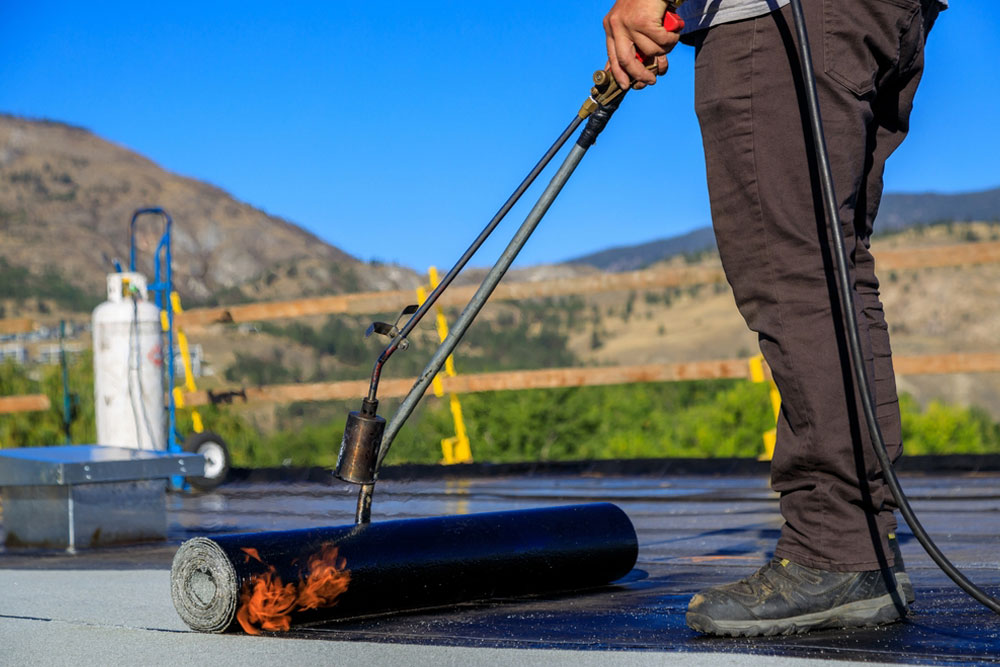
Torch down roofing is a form of modified bitumen roofing installed in rolls. During application, a trained roofer uses controlled heat to soften the underside of the membrane and bond it to an approved roof surface or underlying layer. Once cooled, the material forms a strong waterproofing layer with heat-welded seams.
Because installation involves an open flame, this roofing system requires professional equipment, proper preparation, and strict safety procedures. The performance of the finished roof depends not only on the membrane itself, but also on the roof deck, drainage, insulation, flashing, seam quality, and the experience of the installation crew.
What Is Torch Down Roofing?
This system belongs to the modified bitumen family of roofing systems. Modified bitumen combines asphalt with polymers that improve flexibility, durability, and weather resistance. A common torch-applied material is APP-modified bitumen, which is specifically designed to be heat-welded during installation.
The system gets its name from the way the membrane is applied. The roofing professional positions the roll, heats the underside in a controlled manner, and gradually unrolls it across the prepared roof surface. The heat activates the bitumen so the membrane bonds to the substrate. Seams between adjoining sheets are also heat-welded to create a continuous barrier.
Torch down roofing is especially useful on low-slope roofs because these roofs do not shed water as quickly as steep-slope roofs. Instead of relying on overlapping shingles, the roof uses a continuous membrane to protect the structure from moisture.
How Does Torch Down Roofing Work?
The success of the installation begins before the first roll is installed. The roof deck must be evaluated for damage, trapped moisture, weak areas, incompatible materials, and drainage problems. Any conditions that could compromise the new roof should be corrected first.
Once the roof is ready, the membrane is aligned and installed according to the selected manufacturer’s requirements. Heat is applied carefully so the underside of the material reaches the proper temperature without being overheated. The membrane is then pressed into place while the bitumen is activated.
Seams are one of the most important parts of the roof system. Properly welded laps help prevent water from reaching the layers below. Flashing around drains, vents, walls, parapets, skylights, and other penetrations also needs to be integrated into the system correctly.
What Are the Main Components of a Torch Down Roofing System?
The exact assembly varies by building and product, but a complete torch down roofing system may include several coordinated layers:
- Roof deck: The structural surface supporting the roofing system must be sound and properly prepared.
- Insulation: Depending on the project, insulation may be added or upgraded to improve thermal performance.
- Cover board or approved substrate: This can provide a stable surface and additional protection beneath the membrane.
- Base sheet: Some assemblies use a base membrane beneath the cap sheet for additional protection.
- Modified bitumen cap sheet: This is the primary waterproofing membrane.
- Flashing components: These protect roof edges, penetrations, walls, curbs, drains, and transitions.
A quality modified bitumen project should be designed as a complete roof system rather than simply installing membrane over whatever is already there.
What Is the Difference Between One-Layer and Two-Layer Systems?
A one-layer torch down roofing system generally uses a single torch-applied cap membrane over an approved substrate or base. A two-layer system typically includes a base membrane plus a separate cap sheet.
The additional layer can provide more redundancy and may improve protection against punctures or localized damage. However, the right choice depends on roof traffic, deck condition, building use, warranty requirements, drainage, budget, and long-term plans for the property.
A professional inspection is the best way to determine which torch down roofing configuration is appropriate.
Where Is Torch Down Roofing Commonly Used?
This type of roofing is most commonly used on flat and low-slope sections where a continuous waterproof membrane is more appropriate than shingles.
- Residential additions
- Garages and accessory structures
- Multifamily buildings
- Commercial properties
- Low-slope patio roofs
- Roof sections behind parapet walls
- Buildings with multiple roof elevations
In San Diego, long periods of sunlight combined with seasonal rain make both heat exposure and waterproofing important considerations. A properly designed torch down roofing system should account for drainage, solar exposure, insulation, and the long-term condition of the roof assembly.
What Are the Benefits of Torch Down Roofing?
Strong Waterproofing
The continuous membrane and heat-welded seams can create dependable protection against water intrusion. This is particularly important on low-slope roofs where water may move slowly toward drains or scuppers.
Durability
Modified bitumen membranes are reinforced and designed to withstand normal roof movement, weather exposure, and temperature changes. Actual service life depends on material quality, workmanship, drainage, maintenance, climate, and roof traffic.
Repairability
Localized membrane damage can often be repaired when the surrounding membrane remains in good condition. Whether repair or replacement makes more sense depends on the age of the system and the extent of deterioration below the surface.
Low-Slope Compatibility
The system is specifically designed for roof conditions that require membrane-style waterproofing. That makes it useful for roof areas where conventional asphalt shingles would not be appropriate.
Reflective Options
Some modified bitumen membranes are available with reflective or light-colored surfaces. Depending on the selected product and complete roof assembly, these materials may help reduce solar heat absorption and support better energy performance.
Are There Risks or Disadvantages?
The most important consideration with torch down roofing is installation safety. The process uses an open flame, which creates a fire hazard if combustible materials, hidden cavities, walls, roof edges, penetrations, or surrounding conditions are not properly managed.
Professional installation is essential. The contractor should follow the membrane manufacturer’s instructions, use appropriate fire-control practices, protect combustible surfaces, inspect the work area, and maintain any required fire watch.
The roofer must also apply the correct amount of heat. Too little heat can create weak adhesion, while too much heat can damage the membrane or surrounding materials.
Torch down roofing may also be unsuitable when the existing roof contains trapped moisture, deteriorated decking, incompatible materials, or conditions that make open-flame installation unsafe. These factors should be identified before work begins.
How Long Does Torch Down Roofing Last?
There is no single lifespan that applies to every torch down roofing system. Performance depends on the number of layers, membrane quality, workmanship, sun exposure, drainage, maintenance, foot traffic, penetrations, and the condition of the roof below.
Routine inspections can help extend the useful life of the roof by identifying open seams, damaged flashing, clogged drains, punctures, blisters, surface wear, or sealant problems before they develop into larger leaks.
If an older torch down roofing system has widespread cracking, recurring leaks, extensive deterioration, or moisture beneath the membrane, replacement may be more cost-effective than repeated repairs.
Can Torch Down Roofing Help Improve Energy Efficiency?
Torch down roofing can be part of an energy-efficient roof design, but the membrane itself is only one factor. Roof color, insulation, solar reflectance, thermal bridging, air leakage, roof geometry, and the condition of the building envelope all affect heating and cooling performance.
Pioneer Roofing takes a broader approach by using technology to evaluate the roof before recommending materials. Thermal scanners can reveal temperature differences that may point to insulation problems, wet areas, or unusual heat transfer. Drone inspections can provide detailed views of the roof surface and hard-to-reach areas. Digital measurements and AI-assisted analysis can help improve planning, estimating, documentation, and material efficiency.
For the right property, combining torch down roofing with improved insulation, reflective materials, better drainage, and a properly designed roof assembly can help reduce unwanted heat gain or heat loss. Pioneer Roofing estimates that, in suitable projects, its energy-focused roofing approach can contribute to future heating and cooling cost savings of up to 30%. Actual savings vary based on the property, existing insulation, HVAC system, roof design, climate conditions, and materials selected.
What Maintenance Does Torch Down Roofing Need?
Even a well-installed torch down roofing system should be inspected periodically. Maintenance helps identify small issues before they become expensive repairs.
- Check seams for separation or damage.
- Inspect flashing around vents, pipes, drains, and curbs.
- Keep drains and scuppers clear of debris.
- Watch for standing water that remains after rainfall.
- Look for punctures caused by rooftop equipment or foot traffic.
- Check for cracking, blistering, or unusual surface wear.
- Inspect areas where HVAC or other contractors have worked.
Property owners should also avoid unnecessary foot traffic on the membrane. If rooftop equipment needs frequent service, designated walk paths or protective measures may reduce wear.
Can Torch Down Roofing Be Installed Over an Existing Roof?
Sometimes it can, but the decision should be based on inspection rather than assumption. Installing new torch down roofing over an existing system depends on the roof deck, existing materials, structural loading, moisture conditions, manufacturer requirements, and local building requirements.
Covering a wet roof can trap moisture and hide deteriorated insulation or decking. Thermal scanning, moisture testing, core samples, or selective investigation may be appropriate before deciding whether an existing roof can remain.
The City of San Diego publishes current roofing and reroofing requirements that can affect roof classifications, structural work, and permitting. Those requirements should be reviewed for the specific property before construction begins.
How Does Torch Down Roofing Compare With Other Flat-Roof Systems?
Property owners often compare torch down roofing with TPO, PVC, self-adhered modified bitumen, cold-applied membranes, coatings, and built-up roofing.
TPO and PVC typically use hot-air-welded seams rather than an open-flame torch. Self-adhered modified bitumen uses factory-applied adhesive. Cold-applied systems rely on approved adhesives. Roof coatings can extend the life of certain existing roofs but are not automatically a substitute for membrane replacement.
The right system depends on slope, drainage, roof traffic, substrate condition, fire-safety constraints, insulation goals, budget, building use, and maintenance expectations. Torch down roofing is a strong option for many properties, but it should be selected because it fits the roof rather than simply because it is familiar.
What Should You Ask Before Choosing Torch Down Roofing?
- What modified bitumen system are you recommending?
- Is the roof deck dry and structurally sound?
- Does any existing roofing need to be removed?
- What insulation or cover board is included?
- How will drains, parapets, penetrations, and edges be flashed?
- What fire-safety procedures will be used?
- What manufacturer requirements apply?
- What warranty options are available?
- How should the finished roof be maintained?
A detailed proposal should explain the complete torch down roofing assembly. Membrane quality matters, but so do drainage, flashing, insulation, substrate preparation, seam work, and installation safety.
How Do Thermal Scanners, Drones, and AI Improve Roofing Decisions?
Technology is most valuable when it helps the roofing team understand the building before construction begins. A visual inspection remains important, but modern tools can reveal conditions that may otherwise be difficult to document.
Thermal scanning can highlight unusual temperature patterns that justify closer investigation. Drones can document large roof areas and difficult access points. Digital measurements can help improve estimating accuracy and reduce unnecessary material waste. AI-assisted analysis can help organize inspection information and support more consistent project planning.
For a torch down roofing project, these tools can help identify where insulation may need replacement, where drainage needs attention, and whether the existing roof is a reasonable candidate for recover or complete replacement. Technology does not replace skilled roofers; it gives them better information for making decisions.
Is Torch Down Roofing Right for Your Property?
Torch down roofing can be an excellent choice for many low-slope roofs, but the decision should start with the condition of the building. The roof should be evaluated for moisture, drainage, structural condition, insulation, existing materials, penetrations, slope, sun exposure, and future use.
If the substrate is appropriate and the project can be completed safely, torch down roofing can provide a durable waterproofing solution with practical repair and maintenance options. If the existing roof or building conditions make torch application unsuitable, another membrane system may be a better choice.
The best roofing recommendation is based on actual roof conditions, not assumptions. Inspection, measurement, and system design should come before product selection.
How We Can Help
Pioneer Roofing is a family-owned San Diego roofing company that combines proven roofing craftsmanship with an innovative approach to inspection, planning, and installation. We use tools such as thermal scanners, drone inspections, digital measurements, and AI-assisted analysis to understand roof conditions in greater detail and identify opportunities to improve efficiency, control construction costs, and strengthen long-term energy performance. If torch down roofing is the right fit for your property, we can design the roof around waterproofing, drainage, insulation, durability, and energy efficiency instead of treating the membrane as a one-size-fits-all solution. Our goal is to build a roof that performs well today while helping reduce avoidable future costs, and we can evaluate your property, explain your options, and determine whether torch down roofing is the right solution for your home or commercial building.