
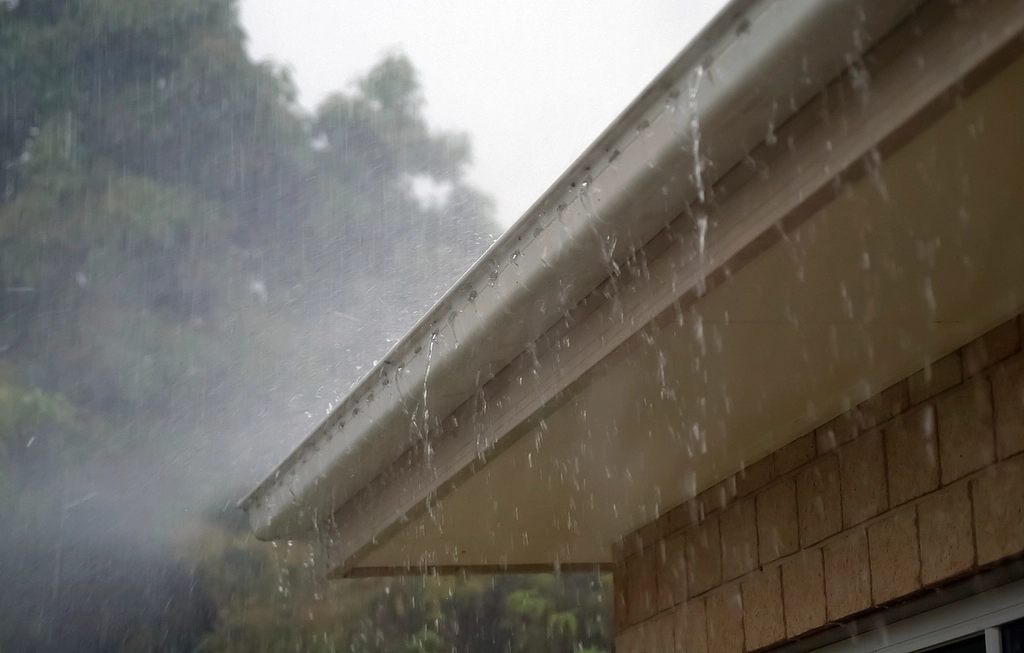
During a San Diego storm, the first 24 hours of roof leak repair are mostly up to you. Stay off the roof, keep everyone away from wet wiring and light fixtures, catch the water, and photograph the damage. Then call a licensed roofer who can tarp the opening and track down where the water is really getting in.
The first day, by the clock:
- First 15 minutes: get people away from the drip and any wet wiring, and stay off the roof.
- First hour: catch the water, move your belongings and photograph the damage.
- Hours 1 to 2: call a roofer if water is reaching your living space or the roof deck is exposed.
- Hours 2 to 12: keep emptying containers and watching the ceiling. Write down what happened and when.
- Hours 12 to 24: once the rain stops, check the roof from the ground, call your insurer if you plan to claim, and book a roofer.
If water is coming through your ceiling as you read this, do steps 1 to 3 now and come back to the rest of this page later.
Our June guide on what to do when your roof leaks tonight covers the basic do’s and don’ts. A storm adds two complications: rain that keeps coming for hours, and an insurance claim you’ll want documented from the first drip.
What should you do the moment your roof starts leaking?
Deal with people and electricity first, then the water. In the first 15 minutes, the roof can wait.
- Move people and pets out of the room, and keep everyone out from under a sagging or bulging ceiling. A ceiling holding water can come down.
- Stay out of the room if water is dripping from a light fixture or ceiling fan, or running near outlets.
- If you can reach the breaker panel from a dry floor, switch off that room’s circuit. Leave the panel alone if anything around it is wet. Sparks or a burning smell mean it’s time to get everyone out and call 911.
- Put a bucket under the drip.
As the federal government’s Ready.gov flood safety guidance (checked October 2026) says, “Do not touch electrical equipment if it is wet or if you are standing in water.”
For the first few minutes, our San Diego roof repair page says: “Right now, stay off the roof, put a bucket under the drip and take photos. Then call (619) 432-7663.”
Is it safe to go on the roof during rain?
No. Stay off the roof while it’s raining, and afterward until a roofer has looked at it.
Wet clay and concrete tile is slippery and can crack under your weight, and storm-lifted shingles slide underfoot. Add a ladder on soft ground and a gust of wind, and a small slip becomes a fall from roof height. Keep any ladder well away from the power lines that run to the house.
The morning after, look from the ground or a window and leave close-up work to a roofer. Ground-level photos still help your insurer.
How do you limit interior damage tonight?
Catch the water and get your belongings out of its path. Keep a record as you go.
- Put a towel in the bucket to cut splashing, and add containers if the drip spreads.
- Move furniture, electronics, rugs and paperwork out, and cover what you can’t move with plastic.
- If you can get into the attic safely, take a flashlight. Step only on the framing, never the drywall between joists, and stay clear of wiring. A container set on a board up there can catch the water before it reaches the ceiling.
- Photograph the drip, the stain and wet belongings before you clean up. Our post on what to photograph for the adjuster has a full shot list.
- Keep receipts for anything you buy because of the leak.
| Do | Don’t |
|---|---|
| Switch off the room’s circuit if you can reach the panel from a dry floor | Touch wet lamps, cords or outlets |
| Photograph the damage before you clean up | Throw out damaged materials before your insurer has seen them |
| Keep receipts for supplies and temporary fixes | Start permanent repairs before the adjuster has seen the damage |
| Call a roofer if water is reaching your living space | Climb onto a wet roof or lean a ladder on a wet gutter |
When should you call an emergency roofer?
Call right away if water is coming into your living space now, or if wind or storm damage has left the roof deck exposed before more rain arrives. That’s how we define an emergency roof leak. On those calls, we stop the water first, with emergency tarping where it’s needed, and make the permanent repair after.
A slow, contained drip that isn’t getting worse may not need an emergency visit, but it still needs a roofer before the next storm.
When you call (619) 432-7663, tell us where the water is showing up and what you can see from outside. Se habla español.
What should you do in hours 12 to 24, after the rain stops?
In the second half of the first 24 hours, document the damage and start drying out. Then get a roof leak repair on a San Diego roofer’s calendar.
- Walk around the house and photograph what you can see from the ground, such as slipped tiles, lifted shingles, branches and overflowing gutters.
- If you plan to file a claim, call your insurer and ask what they need before the adjuster visits.
- Once the wiring is safe, dry the room with fans or a dehumidifier, after photographing wet items.
- Leave the ceiling stain alone. Painting over it or patching the drywall now hides evidence and can trap moisture.
What will a roofer do on the first visit?
On a storm leak, the first visit has two jobs: stop the water, then find where it’s getting in. The stain on your ceiling is often not under the hole, because water travels before it drips. Where it gets in depends on the roof:
- On tile roofs, leaks usually come from the underlayment or the flashing rather than the tiles themselves.
- On shingle roofs, storms and Santa Ana winds lift the edges.
- Flat roofs fail at seams, around drains and where the membrane blisters.
- Metal roofs leak at seams, fasteners and penetrations.
- Near the coast, flashing corrodes, and solar panel mounts can leak where they attach.
At Pioneer Roofing, we inspect with drone imaging and thermal scanning where they help. Drone mapping shows us the whole roof, and thermal scanning can pick up moisture hidden under the surface. Your written quote then explains what’s wrong and whether we recommend repair or replacement.
Will insurance cover storm leak repairs?
That depends on your policy and on what caused the leak, and only your insurer decides. Read your policy or ask your agent before assuming either way.
The California Department of Insurance’s storm damage tips (checked October 2026) say, “Homeowners policies do not cover flood damage, but they may cover other kinds of water damage.” Whether rain coming through a roof is covered can depend on what caused the opening, so check the water damage section of your policy.
The same tips list steps that fit the first 24 hours:
- “Make temporary repairs to prevent your property from further damage.”
- “Take pictures and keep records of all clean up and repair costs.”
- Keep a “claim diary” of every conversation with your insurer or adjuster.
- Before you hire a contractor, check their license and any complaints with the Contractors State License Board. Ours is California C-39 Roofing License #1060507.
The next steps are in our guide on how to file a roof insurance claim in San Diego. None of this is insurance advice for your situation.
Frequently asked questions
Should I tarp my own roof during a storm?
We don’t recommend it. Tarping in a storm means climbing onto a wet, slippery roof in wind, and a fall is far worse than a stained ceiling. Stay inside and catch the water. If storm damage has exposed the roof deck, that’s an emergency, and the tarp is a job for a roofing crew.
Why isn’t the ceiling stain right under the roof damage?
Water often travels before it drips. It can run along the underlayment, the roof deck and the framing until it finds a low spot, so the stain may show up some distance from the actual opening. On tile roofs, the leak usually starts at the underlayment or the flashing, not the tile you can see.
Should I make permanent repairs before the adjuster sees the damage?
The California Department of Insurance says no. Its storm tips advise temporary repairs to prevent further damage, but add, “Don’t make permanent repairs until the insurance adjuster sees the damage.” Keep photos and receipts for anything you do in the meantime, including emergency tarping, and ask your insurer what it expects from you.
Does one storm leak mean I need a new roof?
Not necessarily. At Pioneer Roofing, we recommend a repair when the damage is limited to one area and the rest of the roof still has useful life. Replacement makes sense when damage is spread across the roof, the underlayment is worn out, or leaks keep coming back after proper repairs. We tell you which one applies before we quote.
How we can help
Pioneer Roofing Company handles roof leak repair across San Diego County, on homes, HOAs and commercial buildings, whether you’re in the first 24 hours of a roof leak or looking at last week’s stain. We stop the water first, with emergency tarping where it’s needed, then find the real entry point and give you a written quote that says whether we recommend repair or replacement.
We’re a family business, licensed in California (C-39 Roofing, License #1060507) and insured. If your roof is leaking now, call (619) 432-7663 or request a free quote. Se habla español.