San Diego homeowners rarely choose a new roof based on appearance alone. A roof has to handle strong sun, coastal air, seasonal rain, changing temperatures, and the long-term cost of keeping a home comfortable. That is why more homeowners are considering a standing seam metal roof when it is time to replace an aging roofing system.
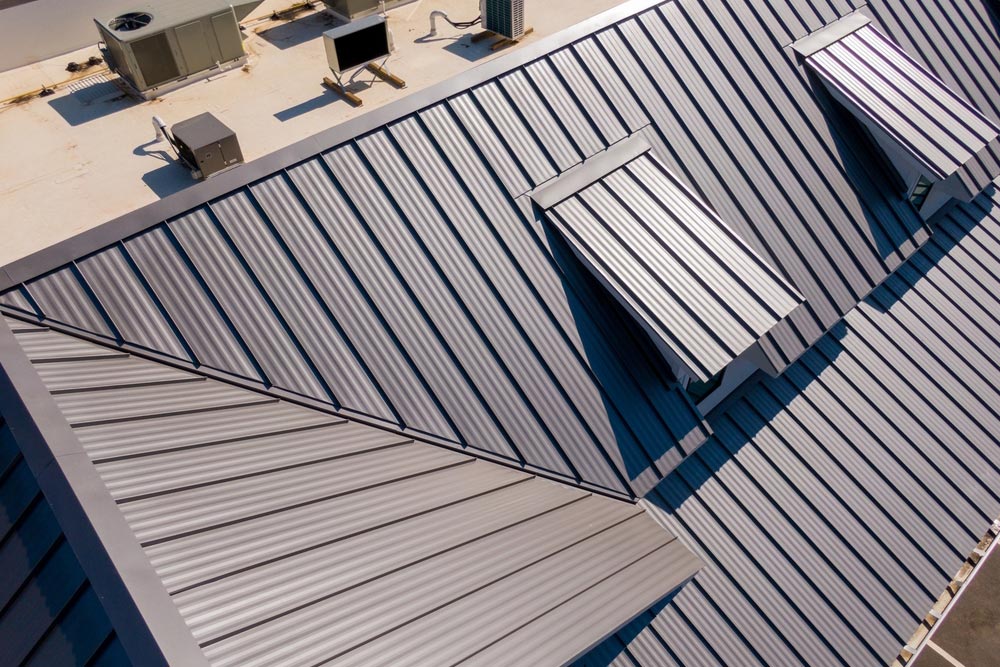
A standing seam metal roof has a clean, modern appearance, but the real value is in how the system is built. Instead of relying on exposed fasteners across the field of the roof, the panels connect along raised vertical seams while many of the attachment points remain concealed. Properly designed systems also account for the natural expansion and contraction of metal as temperatures change.
For the right San Diego home, this can create a roofing system that is durable, visually distinctive, and compatible with a more energy-conscious building strategy. It is not automatically the best choice for every property, however. Roof slope, architecture, budget, proximity to the coast, insulation, ventilation, solar plans, and installation quality all matter.
What Is a Standing Seam Metal Roof?
A standing seam metal roof is made from long metal panels that run from the upper portion of the roof toward the eaves. The edges of adjacent panels meet at raised seams. Depending on the system, clips and concealed fasteners secure the panels to the roof structure while allowing appropriate movement caused by temperature changes.
This design is different from many exposed-fastener metal roofing systems, where screws are visible on the surface of the panels. Concealing critical attachment points can reduce the number of exposed penetrations in the main roof surface and gives the finished roof its crisp architectural lines.
The result is one reason a standing seam metal roof is often chosen for contemporary homes, custom residences, coastal properties, additions, and homeowners who want a roof that feels like an architectural feature rather than simply a covering.
Why Standing Seam Roofing Works Well in San Diego
San Diego has a climate that can be forgiving in some ways and demanding in others. Homeowners do not generally design for months of snow accumulation, but roofs still experience intense sunlight, warm roof-surface temperatures, marine air in coastal neighborhoods, wind, occasional heavy rain, and years of thermal cycling.
A standing seam metal roof can shed water efficiently when the roof assembly is correctly designed, and the system can be engineered so the panels accommodate thermal movement. The exact performance depends on the panel profile, substrate, underlayment, flashing, fastening system, coatings, roof geometry, and workmanship.
San Diego is also a market where exterior design matters. From modern rebuilds and mid-century homes to coastal renovations and accessory structures, a standing seam metal roof can create a strong visual identity without looking overly complicated.
Energy Efficiency Is About More Than the Roofing Material
One of the biggest reasons homeowners ask about metal roofing is energy performance. The answer requires more than saying that metal is energy efficient. Roof performance depends on a complete assembly.
Color and surface properties can influence how much solar energy a roof absorbs. Insulation affects how easily heat moves into or out of the conditioned space. Ventilation, attic conditions, air sealing, roof orientation, shading, and HVAC performance also change the final result. A standing seam metal roof should therefore be evaluated as one component of a larger building-envelope strategy.
The U.S. Department of Energy notes that cool-roof performance is connected to solar reflectance and thermal emittance, and that coating and color matter for metal roofs. That is an important distinction: simply selecting metal does not guarantee the same energy result on every house.
At Pioneer Roofing, our approach is to examine the roof as a system. We use modern tools such as thermal scanners, drones, and AI-assisted analysis to identify areas that may be affecting performance, document roof conditions, improve planning, and help design a more efficient solution. Depending on the home and the scope of work, this integrated approach is designed to help reduce future heating and cooling costs by as much as 30%. Actual results vary based on the property, insulation, equipment, material selections, occupancy, and other conditions.
Potential Benefits of a Standing Seam Metal Roof
Homeowners often compare a standing seam metal roof with asphalt shingles, tile, and other premium systems. The best option depends on the property, but standing seam roofing offers several advantages worth considering.
- Concealed fastening: Many standing seam metal roof systems keep primary fasteners below the panel surface, helping protect critical attachment points from direct exposure.
- Thermal movement: In a standing seam metal roof, properly selected clips and fastening methods can allow metal panels to expand and contract as temperatures change.
- Clean design: Raised seams and long panels create a precise, modern appearance that works well with many architectural styles.
- Long-term durability: A properly specified and installed metal roofing system can deliver a long service life with appropriate maintenance.
- Solar compatibility: Some standing seam systems can work particularly well with solar mounting methods that clamp to the seams, depending on the roof and solar system design.
- Energy-conscious options: Reflective coatings, lighter colors, insulation improvements, and thoughtful roof-assembly design can help manage solar heat gain.
- Low-profile maintenance: Metal does not eliminate roof maintenance, but a quality system can reduce some of the recurring problems associated with aging roofing materials.
What About San Diego’s Coastal Air?
For homeowners considering a standing seam metal roof, living near the coast creates a special design consideration. Salt-laden air can accelerate corrosion when materials, coatings, fasteners, and cut edges are not appropriate for the environment. This does not mean coastal homeowners should avoid a standing seam metal roof. It means material selection should be specific to the exposure of the property.
A home several miles inland may have different conditions from a property near the beach. For a standing seam metal roof, the right metal, protective coating, flashing details, compatible accessories, and maintenance plan should be chosen with the actual location in mind. Mixing incompatible metals can also create corrosion problems, which is another reason roofing details matter.
For coastal homes, the question is not simply, “Do I want metal?” It is, “Which standing seam metal roof system is appropriate for this exact property?” That level of specification can make a major difference over the life of the roof.
Will a Metal Roof Make My Home Hotter?
This is one of the most common misconceptions about a standing seam metal roof. A standing seam metal roof does not automatically make the interior of a house hotter. What matters is how the roof surface interacts with solar radiation and how the entire roof and attic assembly manages heat.
Roof color, coating performance, insulation, ventilation, radiant conditions, air leakage, and the space beneath the roof all influence indoor comfort. In some applications, selecting a roof surface with strong reflective and emissive properties can support a cool-roof strategy. California’s energy standards use specific performance criteria and compliance methods rather than treating all roofing materials as identical.
Because California’s 2025 Building Energy Efficiency Standards apply to permit applications submitted on or after January 1, 2026, roofing decisions should be made with current code requirements in mind when those provisions apply to the project.
How Much Does a Standing Seam Metal Roof Cost?
A standing seam metal roof usually requires a larger initial investment than a basic asphalt-shingle replacement. The price reflects more than the metal itself. Material type, panel thickness, finish, roof size, slope, complexity, tear-off requirements, decking repairs, underlayment, flashing, edge details, penetrations, access, labor, and structural conditions can all affect the final proposal.
A simple gable roof may be more straightforward than a roof with multiple valleys, skylights, dormers, walls, chimneys, and transitions. Coastal-grade materials or premium finishes can also change the budget.
The better question is often not “What is the cheapest roof today?” but “What is the best lifecycle value for this home?” A standing seam metal roof may make sense for a homeowner who plans to stay in the property, values durability, wants a distinctive architectural finish, or is investing in broader energy and exterior improvements.
Standing Seam Metal Roof vs. Asphalt Shingles
When comparing a standing seam metal roof with shingles, asphalt shingles remain popular because they are familiar, widely available, and generally less expensive upfront. For many homes, they are a practical option. A standing seam metal roof, however, is a different category of investment.
A standing seam metal roof can offer a more architectural appearance, concealed fastening, resistance to many common forms of surface deterioration, and strong compatibility with modern design. Asphalt shingles offer lower entry cost and are easier to match on many traditional homes.
Choosing a standing seam metal roof should still depend on the property. Neither material wins every comparison. A homeowner replacing a roof before selling may prioritize budget differently from someone designing a long-term custom home. Pioneer Roofing evaluates those priorities before recommending a material rather than assuming the most expensive option is always the best option.
Standing Seam Metal Roof vs. Tile
When comparing tile with a standing seam metal roof, tile is closely associated with Southern California architecture, especially Spanish, Mediterranean, and mission-inspired homes. It can be beautiful and durable, but it also creates different structural, maintenance, and detailing considerations.
A standing seam metal roof is typically much lighter than many tile assemblies and creates a completely different appearance. It may be an excellent fit for modern, transitional, farmhouse-inspired, industrial, or minimalist designs. Tile may remain the better aesthetic choice for homes where the roof is central to a traditional architectural language.
The decision should account for structure, neighborhood context, desired appearance, water-management details, maintenance expectations, and budget rather than relying on trend alone.
Can You Put Solar Panels on a Standing Seam Roof?
Solar compatibility is a major advantage for some homeowners considering a standing seam metal roof. Certain solar mounting systems can attach to standing seams with clamps, potentially avoiding some penetrations through the metal roof panels. The exact solution must be approved for the roofing profile, solar equipment, loads, and manufacturer requirements.
If solar is part of your long-term plan, it is smart to coordinate roofing and solar decisions before installation. Panel spacing, seam geometry, attachment zones, electrical penetrations, roof access, and future service needs should all be considered. Designing both systems together can reduce avoidable complications later.
Does Every Home Work With Standing Seam Roofing?
No. A standing seam metal roof can be an excellent system, but the house has to support the design. Roof pitch, deck condition, structural framing, penetrations, transitions, drainage, architectural details, and local requirements can influence whether a particular system is appropriate.
Some low-slope applications require specifically engineered standing seam products. Complex roofs may require extensive custom fabrication and flashing. Homes with older decking may need repairs before the new system can be installed. Historical or community design restrictions may also affect material or color choices.
This is where a detailed roof assessment matters. A proposal based only on square footage can miss conditions that later affect performance and cost.
Permits and Current California Requirements Matter
For any standing seam metal roof replacement, requirements can vary depending on the scope and condition of the existing roof. The City of San Diego publishes roofing and permit information through its Development Services Department. Its current guidance explains that some reroofing work is permit-exempt while certain conditions trigger permit and plan requirements.
California energy requirements also continue to evolve. The 2025 Building Energy Efficiency Standards became effective January 1, 2026 for applicable permit applications. If your standing seam metal roof project falls under energy-code provisions, the roof assembly and product selections should be reviewed for compliance rather than based on assumptions from an older project.
Pioneer Roofing treats code, material compatibility, drainage, flashing, ventilation, insulation strategy, and installation details as connected decisions. Innovation is useful only when it produces a roof that works properly in the real world.
Why Installation Quality Matters So Much
A premium product cannot compensate for poor installation. A standing seam metal roof depends on precise panel layout, fastening, seam engagement, flashing, transitions, penetrations, edge conditions, and allowances for thermal movement.
Small mistakes can create big problems. Over-restricting a panel can interfere with thermal movement. Poor flashing can allow water into vulnerable transitions. Incorrectly selected fasteners or accessories can contribute to corrosion. Sloppy penetrations can undermine the advantage of an otherwise well-designed system.
That is why homeowners should evaluate the roofing contractor, the proposed standing seam metal roof assembly, and the installation process—not simply the brand or thickness of the panel.
How Pioneer Roofing Uses Technology Before and During a Project
Pioneer Roofing is a family-owned San Diego roofing company, but our approach is built around continuous innovation. We believe better information creates better roofing decisions.
Thermal scanning can help reveal temperature patterns that deserve closer investigation. Drone imaging can document areas that are difficult to inspect from the ground and provides a broader view of roof geometry and existing conditions. AI-assisted tools can help organize information, improve measurements and planning, and support more efficient project decisions. These technologies do not replace experienced roofers; they give experienced professionals better information to work with.
When we evaluate a standing seam metal roof, we look beyond the visible panels. We consider the existing roof, underlayment, decking, penetrations, insulation-related conditions, ventilation, drainage, solar exposure, roof geometry, and future plans for the property.
Our goal is to build a system that is efficient both during construction and over the years that follow. Where the property and project allow, our integrated energy-conscious approach can help reduce future heating and cooling costs by up to 30%, although actual savings depend on numerous home-specific factors.
Questions to Ask Before Choosing Standing Seam Metal Roofing
Before committing to a standing seam metal roof, ask your roofing contractor questions that go beyond color and price:
- What metal and coating are recommended for my distance from the coast?
- How will the panel system accommodate expansion and contraction?
- What underlayment and deck preparation will be used?
- How will valleys, walls, skylights, vents, and other penetrations be flashed?
- Does my roof geometry require custom fabrication?
- Are current permit or energy-code requirements applicable?
- How will the roof work with future solar panels?
- What maintenance should I expect over time?
- What manufacturer and workmanship warranties apply?
- Can thermal imaging or other inspection technology identify issues worth addressing before installation?
Clear answers to these questions can tell you far more about the expected quality of a standing seam metal roof than a low price alone.
Is a Standing Seam Metal Roof Worth It in San Diego?
For many homeowners, yes. A standing seam metal roof can be especially attractive when durability, modern aesthetics, energy-conscious design, solar compatibility, and long-term ownership are high priorities.
It may be less attractive when the only priority is the lowest initial cost, when the home’s architecture strongly favors another material, or when roof complexity makes the system unnecessarily expensive. The smartest answer comes from evaluating the actual property rather than choosing a material based on popularity.
If you are comparing roof types, think about how long you expect to own the home, your energy goals, future solar plans, maintenance preferences, architectural style, coastal exposure, and total project budget. A standing seam metal roof is most valuable when those factors align with what the system does best.
How We Can Help
Pioneer Roofing combines the care of a family-owned San Diego company with a technology-driven approach to modern roofing. If you are considering a standing seam metal roof, we can evaluate your existing roof, inspect hard-to-see areas with drone technology, use thermal scanning where appropriate, apply AI-assisted planning tools, and recommend a roof assembly based on the real conditions of your home. Our focus is not simply installing metal panels; it is building a durable, efficient roofing system that can protect your property, support long-term energy performance, and make financial sense for the years ahead.